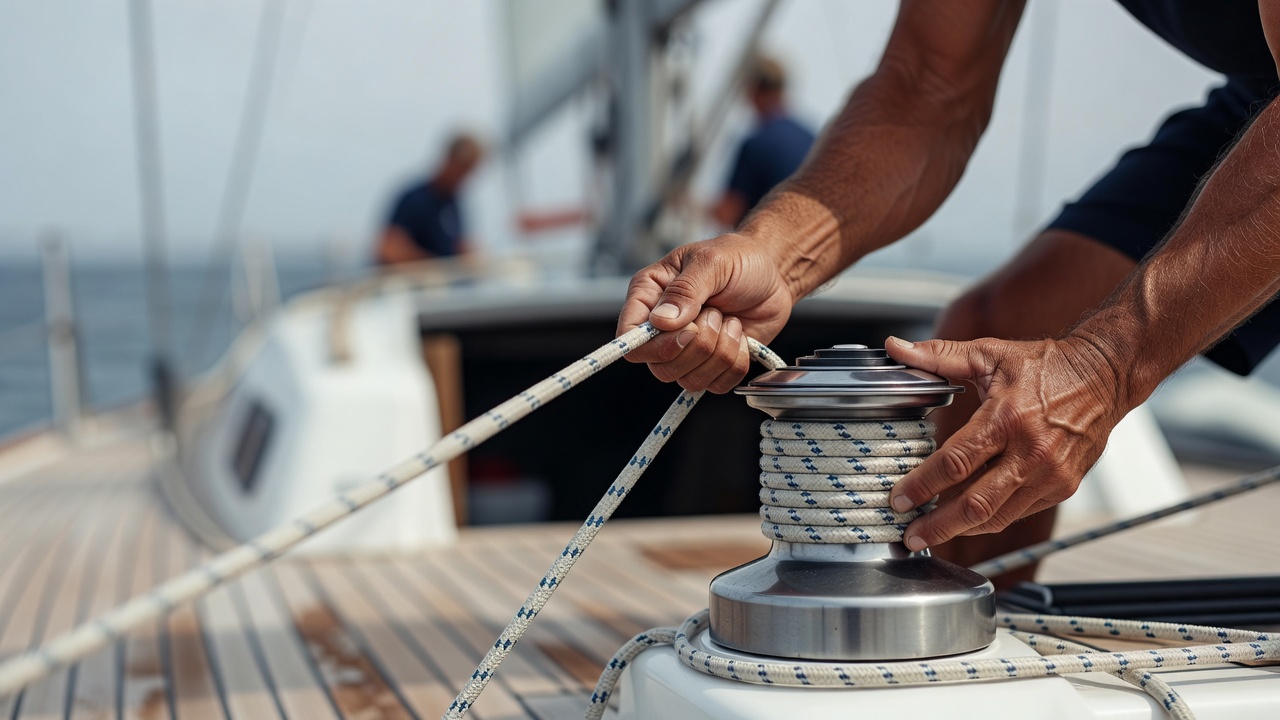
Decide how involved you want to be
There is a meaningful difference between taking the helm briefly, joining everyday boat handling and following a structured course. Decide which of these appeals before comparing holidays. A relaxed outing can include plenty of participation without being tuition. Equally, a learning-focused week may involve repetition, briefings and a timetable that feels different from a sightseeing cruise.
Explain your experience in practical terms. Mention the kinds of boats you have sailed, how recently you sailed and whether you have handled lines, steered or navigated. A qualification can be useful evidence, but it does not replace a conversation about present confidence. If you are a beginner, ask how the first session is introduced and whether you can step back from a task without pressure.
Understand who is responsible
The skipper’s responsibility for safe operation should be clear. Ask who provides the safety briefing, how guests are supervised and whether the person leading the day is also an instructor. Instructional credentials, commercial requirements and vessel rules depend on the activity and jurisdiction. Request relevant details from the operator rather than treating a familiar title as a complete assurance.
You should expect a briefing appropriate to the boat and activity, covering movement aboard, equipment and what to do in an emergency. Tell the operator about mobility or other requirements that may affect safe participation. This guide is general planning information, not seamanship instruction. Follow the skipper’s directions and seek qualified instruction for practical sailing skills.
Read the destination locally
Broad descriptions such as “gentle Mediterranean sailing” leave out important detail. The Meltemi in the Aegean, the Bora in the Adriatic and the Mistral around parts of the western Mediterranean are examples of regional winds that can influence plans. Their relevance varies with location, season and the day’s forecast. A sheltered harbour does not tell you what conditions will be outside it.
The Solent and the waters around Cowes illustrate another consideration: tides and busy traffic can shape a passage even when the sailing distance looks modest. Around the Gulf of Morbihan, local tidal planning is particularly important. These are not reasons to avoid a destination; they are reasons to ask how the programme is designed around its actual operating area.
Leave the route flexible
A published itinerary should be understood alongside its weather provisions. Ask which parts are illustrative, who decides on changes and how alternative sailing areas are chosen. Strong wind is not the only cause of a change. Limited wind, swell, harbour restrictions, equipment issues and the group’s ability can also affect what is sensible.
Keep the connection with your accommodation in view. If you must return to the same shore base, the sailing day has a practical boundary. If a passage may end elsewhere, you need to know the transfer arrangement. Avoid scheduling a tight flight connection around an assumed return time, and ask the provider what buffer they recommend for the specific itinerary.
Comfort is part of participation
Consider boarding steps, cockpit seating, shade, toilet access and the possibility of spray. Ask about the actual boat rather than judging comfort from length alone. A larger vessel may still have awkward movement between deck and cabin. Catamarans and monohulls have different layouts and motion characteristics, but neither guarantees freedom from seasickness.
If motion sickness concerns you, discuss the likely passage profile with the operator and seek advice from a pharmacist or qualified clinician about suitable prevention. Do not rely on a holiday description as medical guidance. Bring clothing appropriate to the conditions and ask which personal equipment is provided. Confirm the availability and fit of safety equipment, especially where individual needs require advance preparation.
The value of a day ashore
A non-sailing day need not be a failed holiday. A suitable shore base can support a walk, a museum visit or an unhurried meal while conditions change. But distinguish an appealing alternative from a contractual replacement. Ask whether an activity is included, merely suggested or payable separately. Weather policies should explain the financial position as well as the programme.
When comparing options, look for an operator who answers specific questions without promising perfect conditions. The strongest arrangement makes the ordinary sailing day clear and the altered day manageable. It allows participation to grow with confidence while keeping safety decisions where they belong: with the responsible professionals and the conditions in front of them.